⌛️ Approximate time to complete: 5 min.
In this tutorial you will learn how to use the Nextmv Marketplace to explore new decision models and the Nextmv Platform, from scratch. Complete this tutorial if you:
- Don’t have a pre-existing decision model and you want to explore the Nextmv Platform.
- Don’t have a background in programming and want a no-code way to explore the Nextmv Platform.
The Marketplace is based on community apps, which are Nextmv applications that showcase how to solve different decision problems with various languages and solvers. They are a great way to explore new decision models and the Nextmv Platform. You can think of community apps as examples that serve as strong references when building and customizing your own decision models.
At a high level, this tutorial will go through the following steps:
- Subscribe to a Marketplace application.
- Run the application remotely.
- Perform scenario testing.
Let’s dive right in 🤿.
1. Create an account
The full suite of benefits starts with a Nextmv Cloud account.
- Visit the Nextmv Console to sign up for an account at https://cloud.nextmv.io.
- Verify your account.
- You’ll receive an email asking to verify your account.
- Follow the link in that email to sign in.
- Log in to your account. The Nextmv Console is ready to use!
2. Subscribe to a Nextmv Marketplace application
So, what is a Nextmv application? A Nextmv application is an entity that contains a decision model as executable code. An application can make a run by taking an input, executing the decision model, and producing an output. An application is defined by its code, and a configuration file named app.yaml, known as the "app manifest".
Think of the app as a shell, or workspace, that contains your decision model code, and provides the necessary structure to run it.
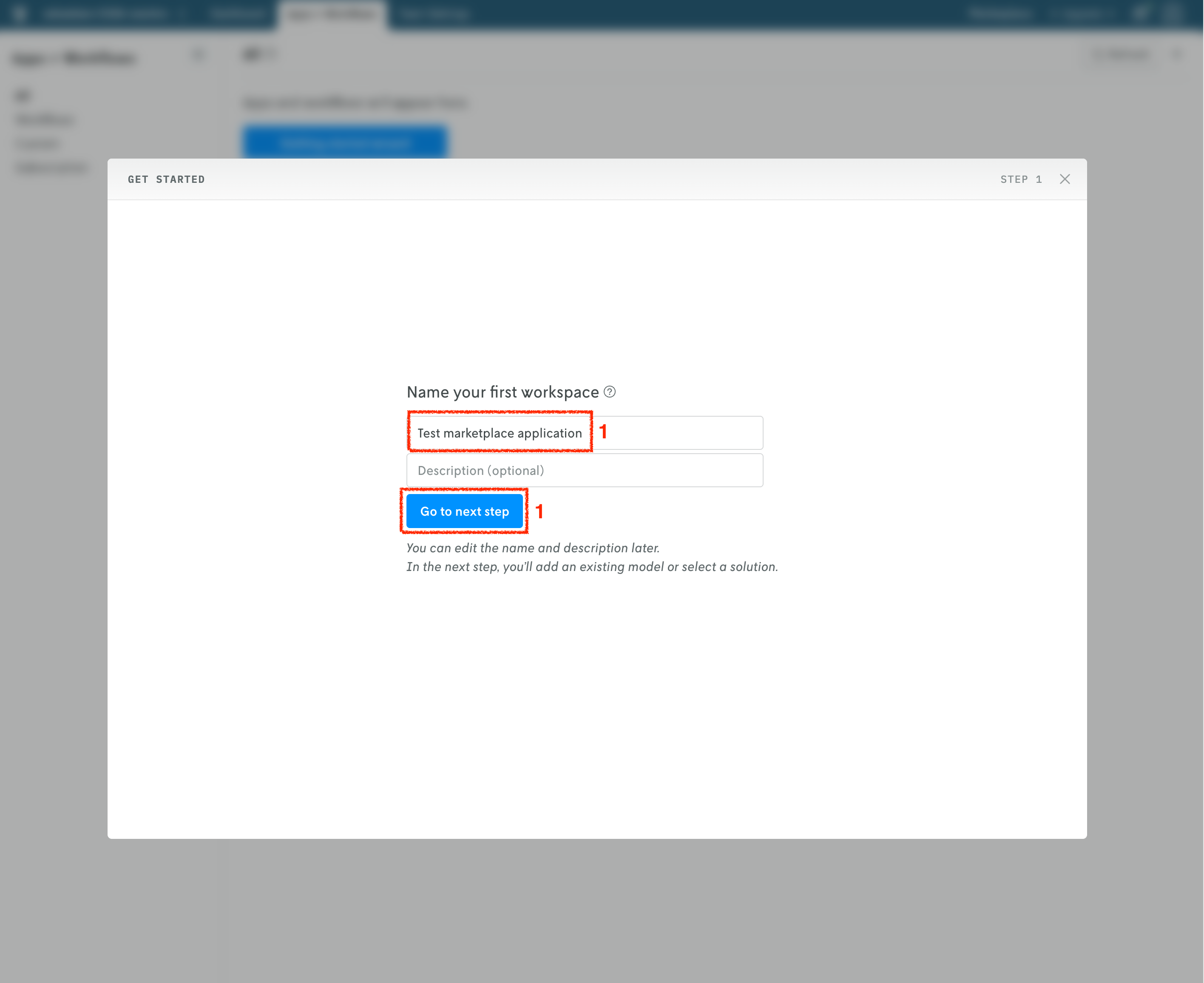
As soon as you log in to Nextmv Console for the first time, you are prompted to create a new application.
- Provide a name for your app.
- You can add an optional description.
- Press the button to create the application.
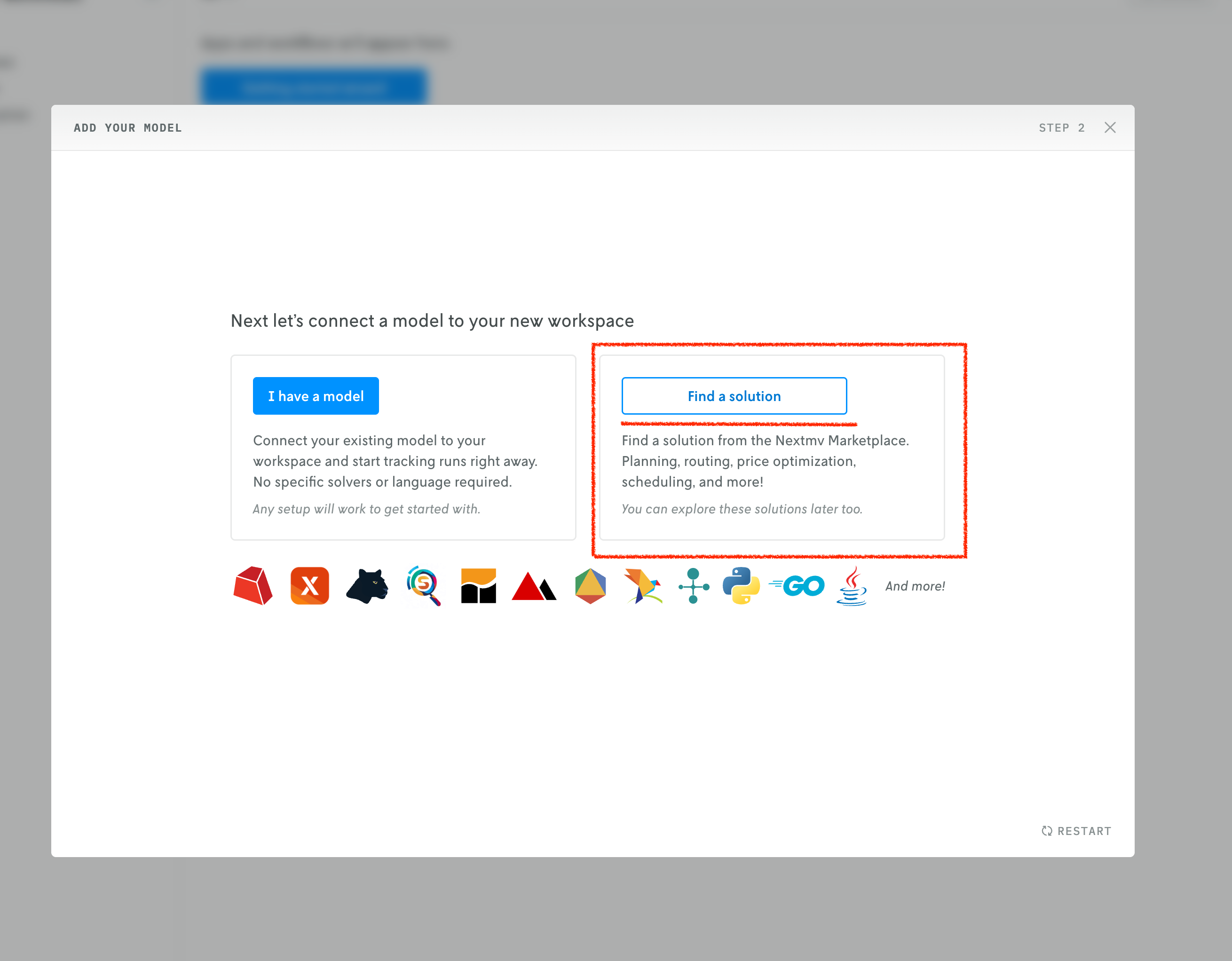
Find a solution from the Nextmv Marketplace. There are applications for different kinds of decision problems, combining a variety of solvers and technologies.
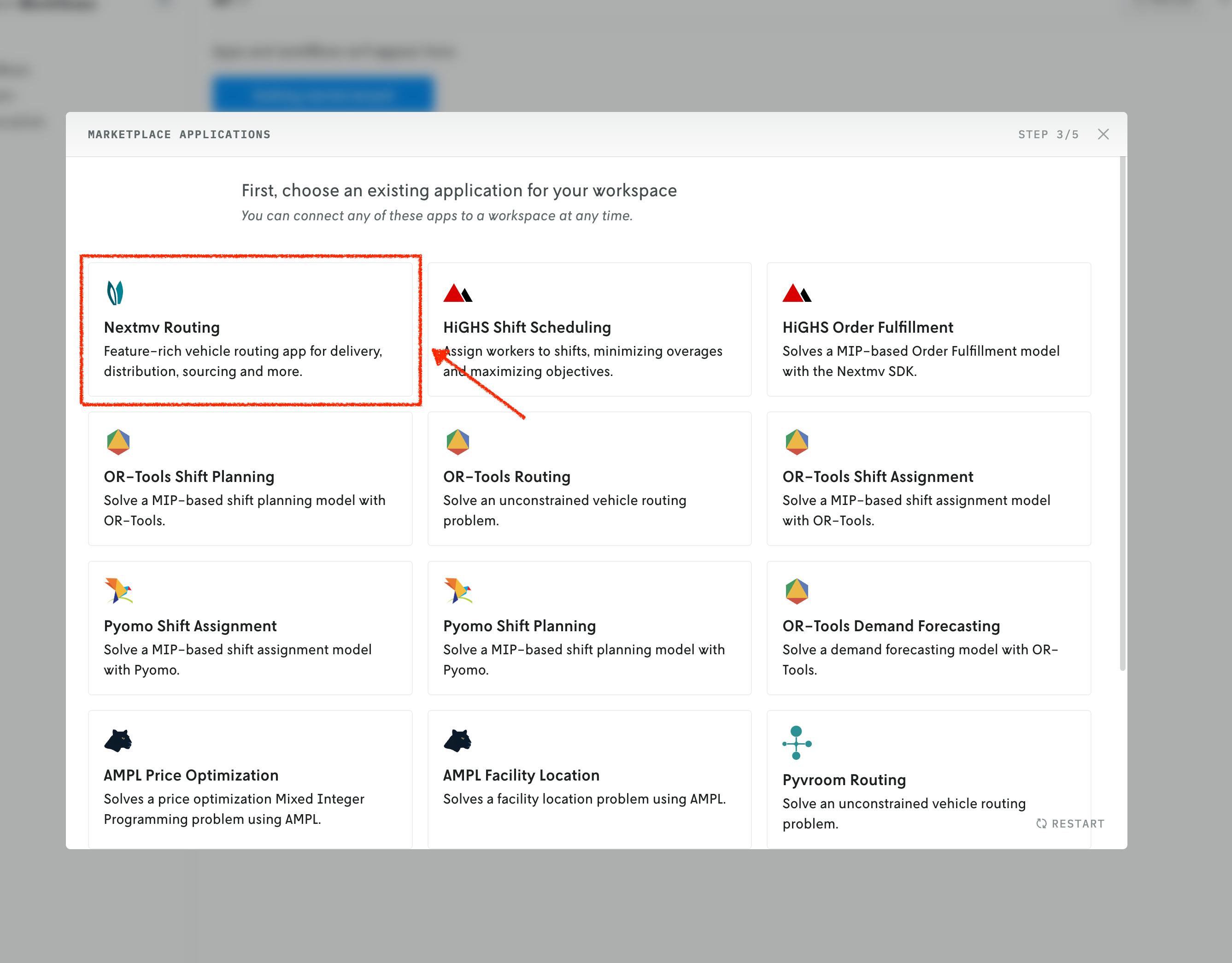
Various options for Marketplace applications will show up. For this tutorial, select the Nextmv Routing app.
An overview for the Marketplace app will be displayed. Press the button to subscribe to the application.
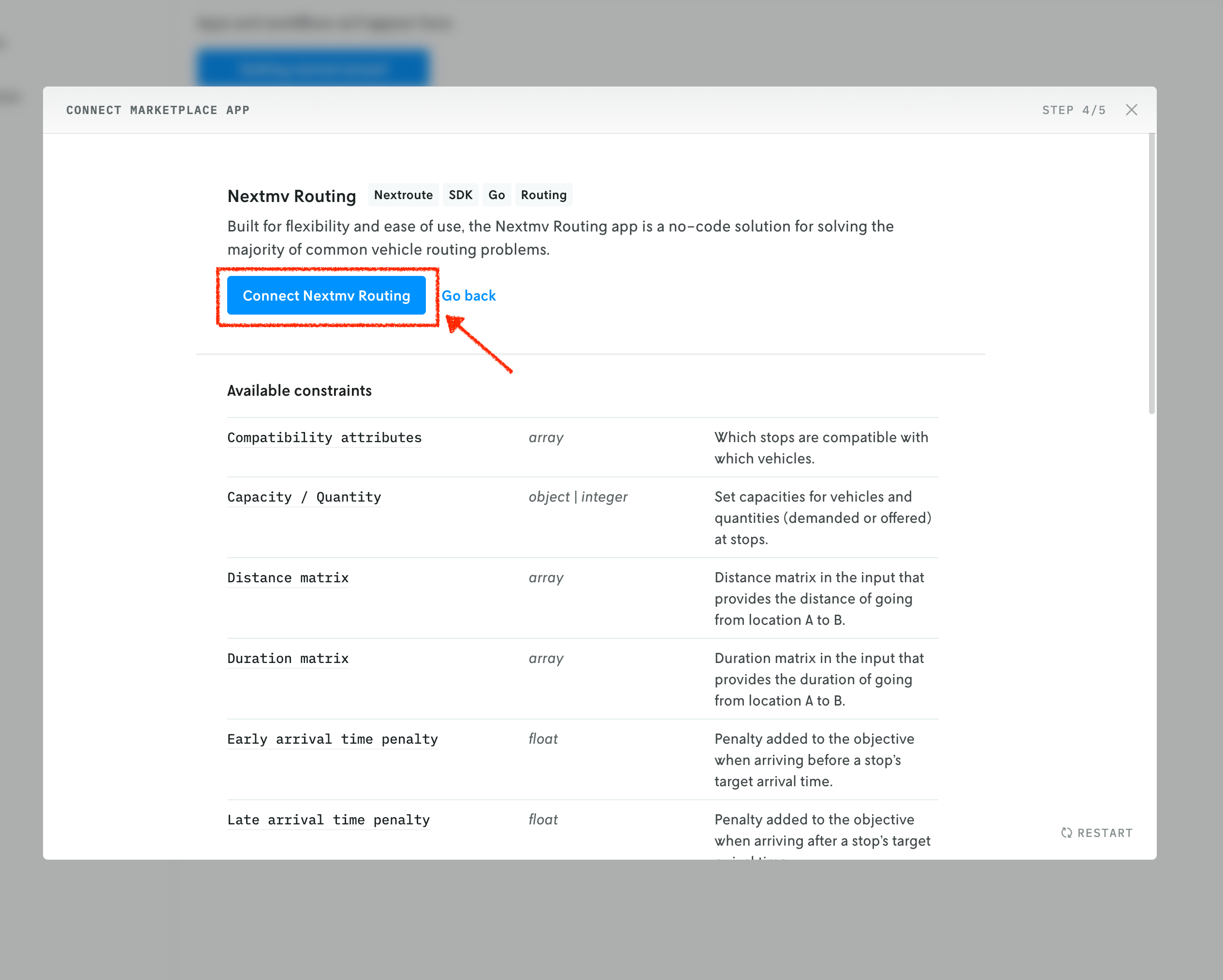
You are ready to proceed to the next step.
3. Run the Nextmv application remotely
To run the Nextmv application remotely, you have several options. For this tutorial, we will be using the Nextmv Console.
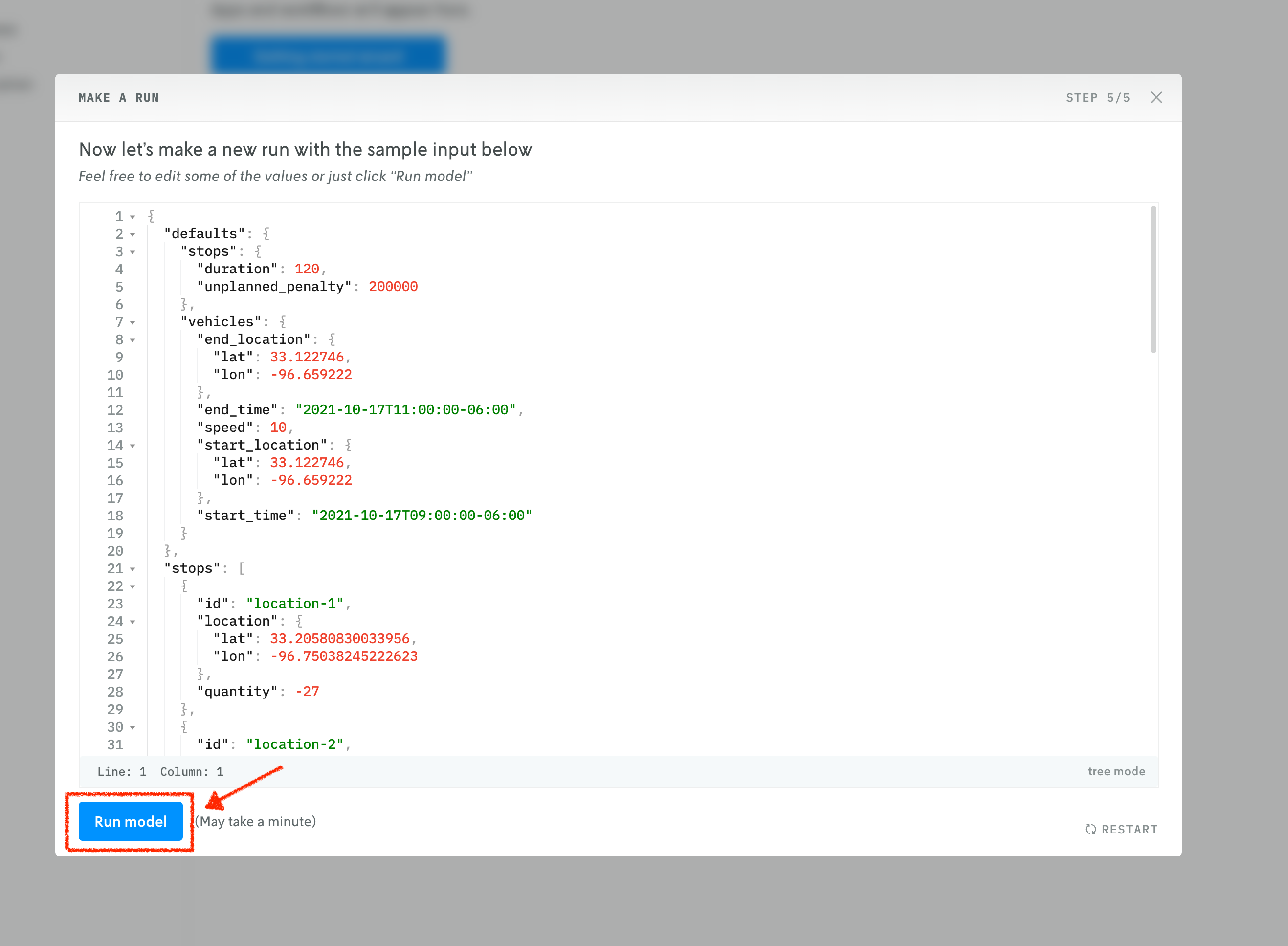
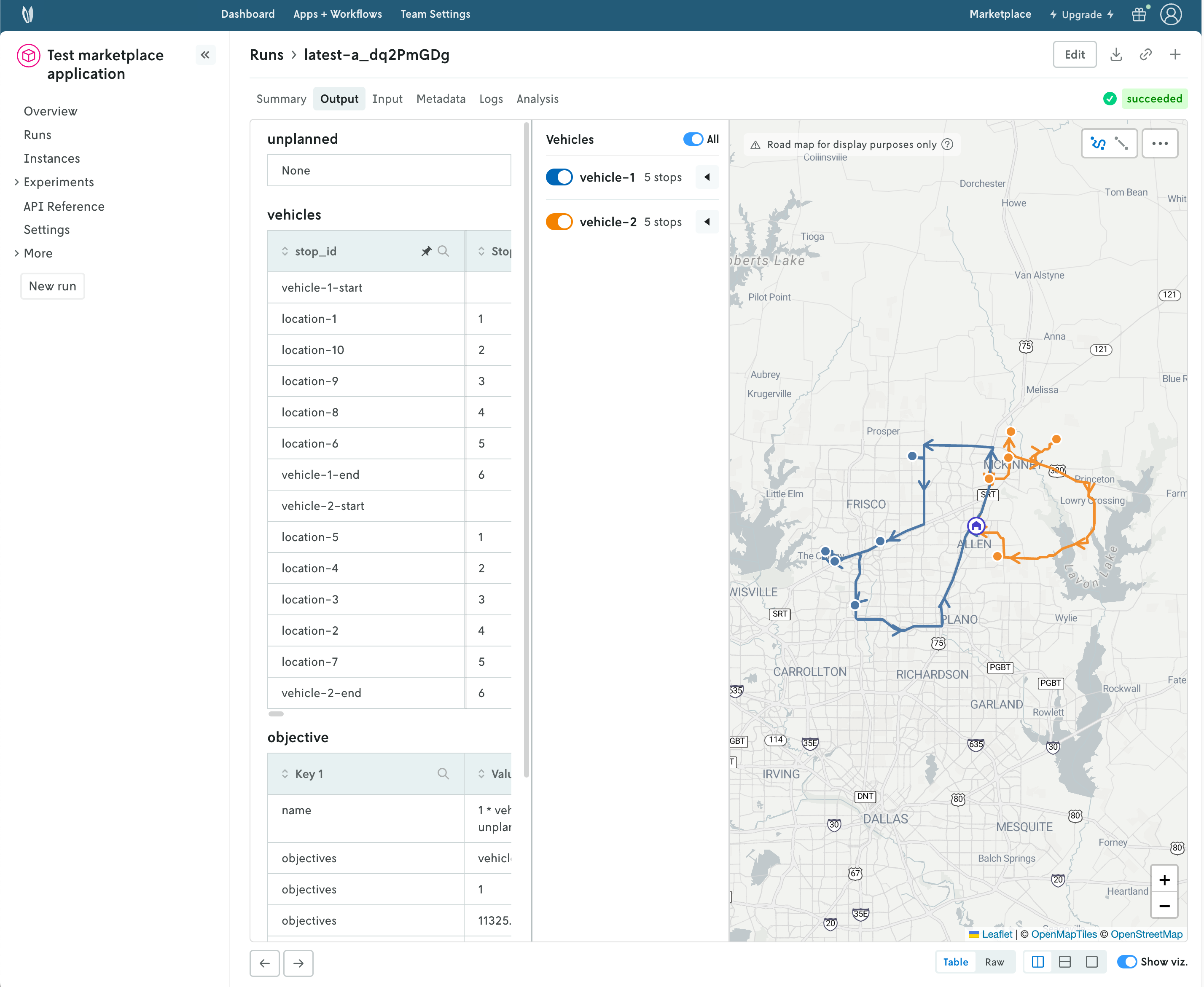
You are prompted to run the application with a sample input already loaded in. Go ahead and run the model.
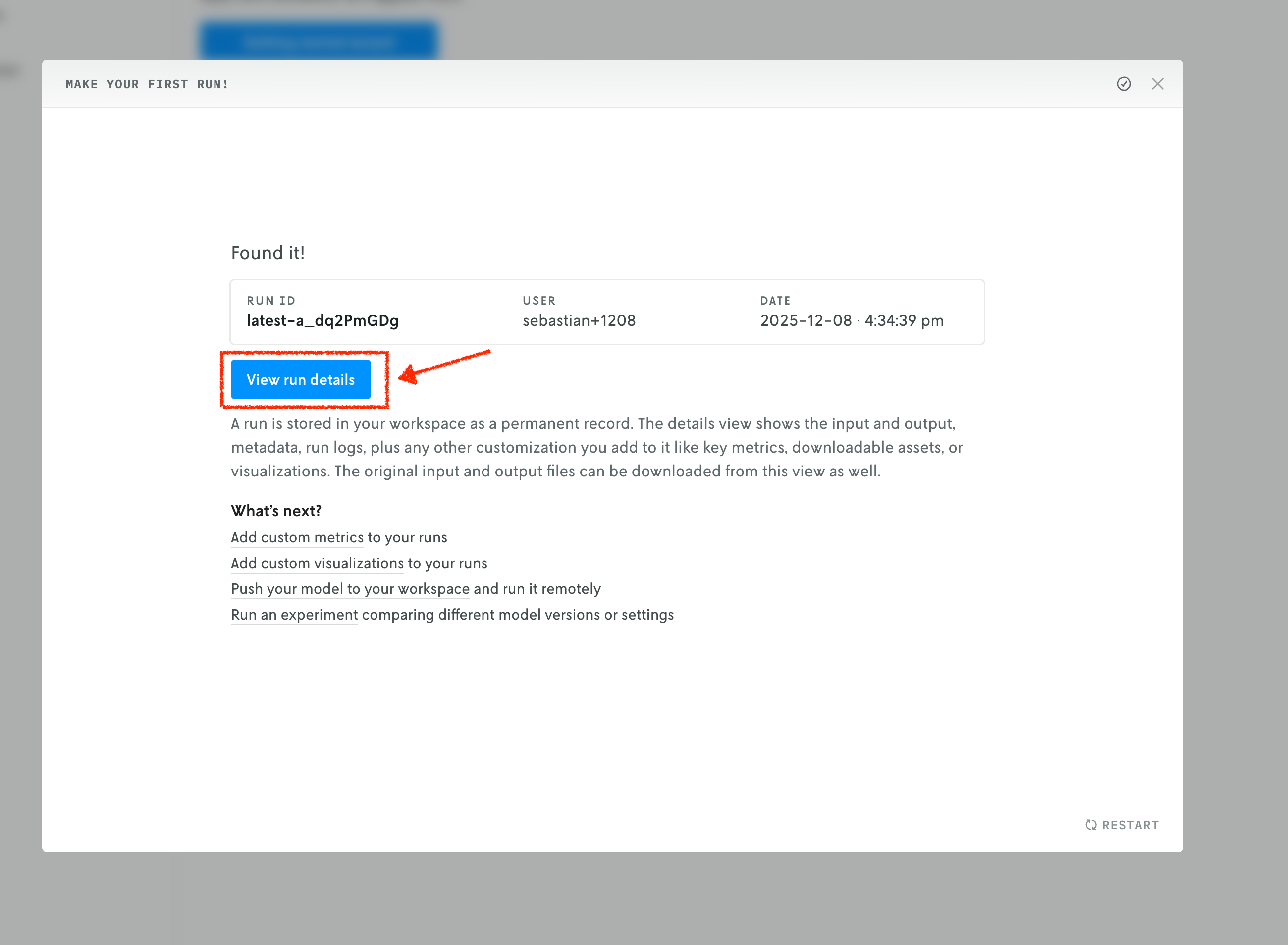
Once the run finishes, you will be prompted to see its details. Press the button to view the run details.
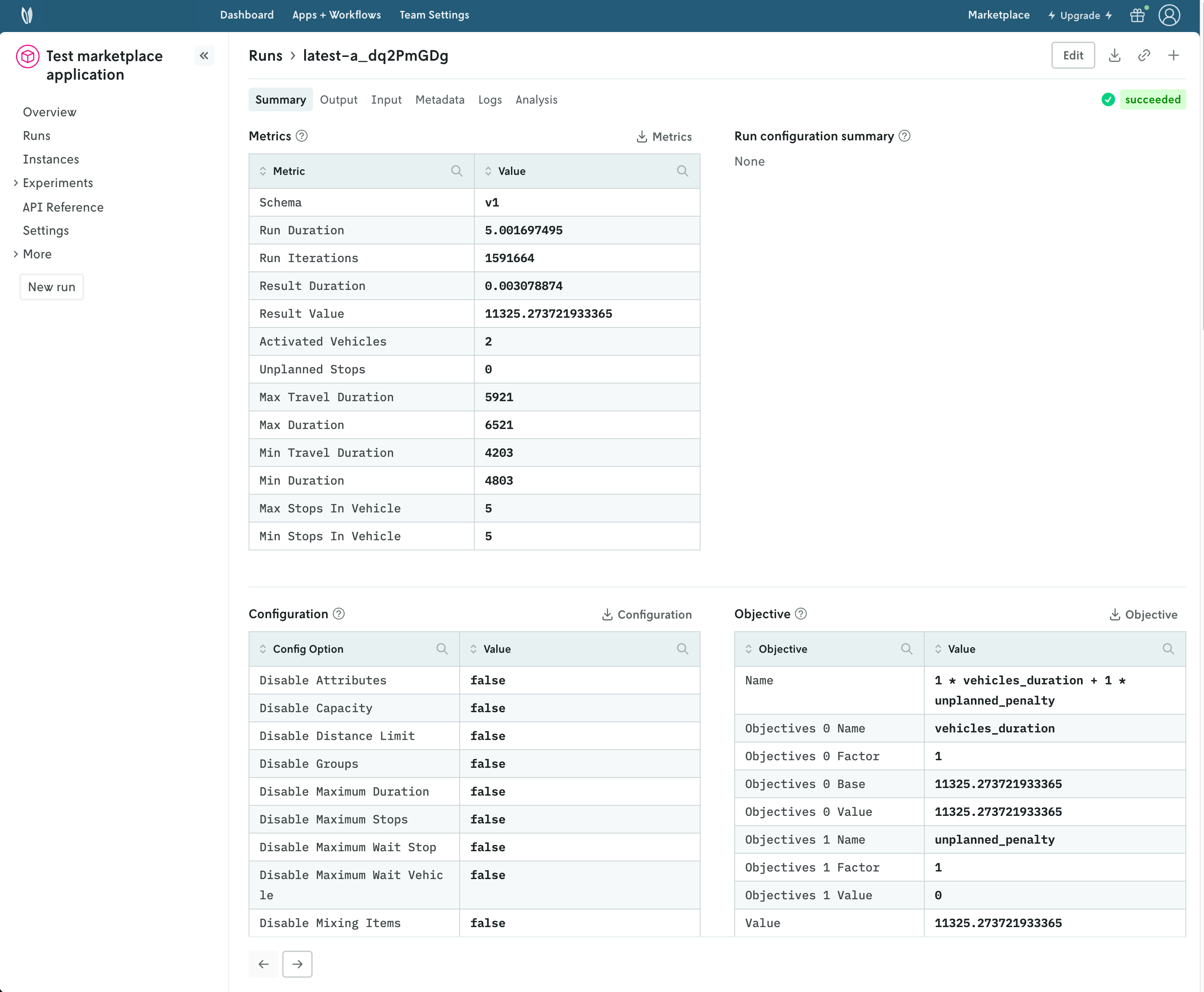
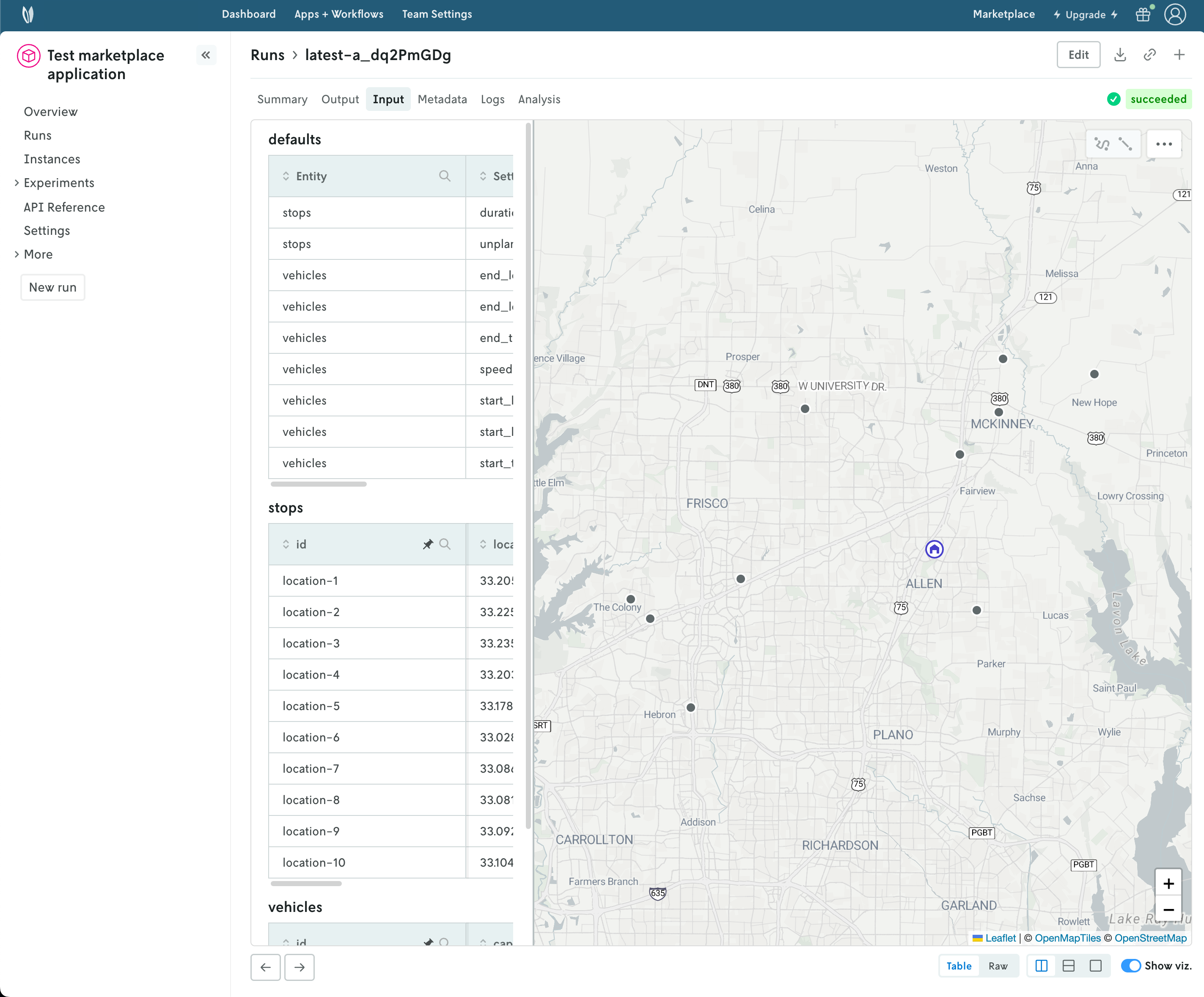
You can use the Nextmv Console to browse the information of the run:
- Summary
- Output
- Input
- Metadata
- Logs
Nextmv is built for collaboration, so you can invite team members to your account and share run URLs.
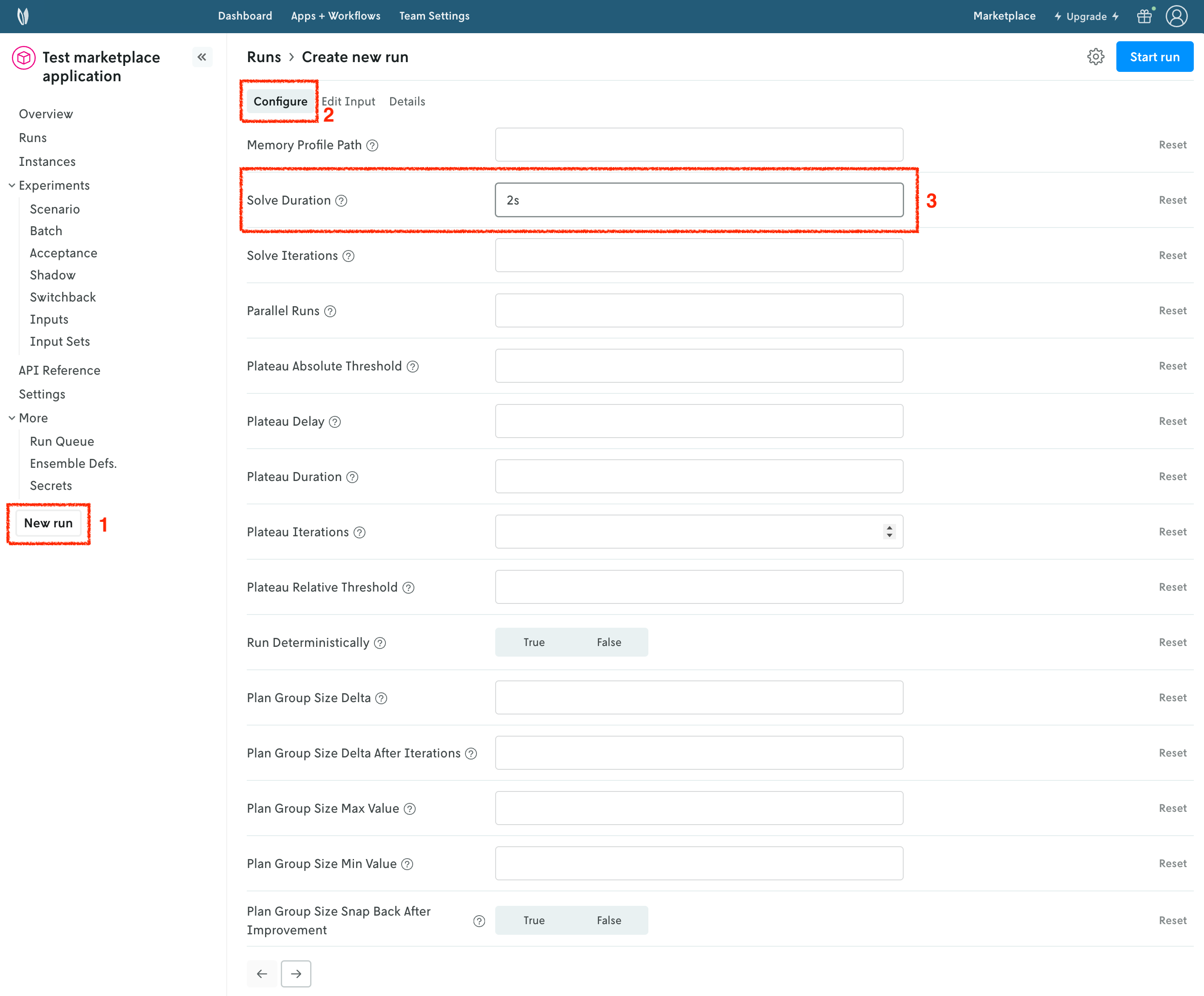
We are going to create another run, this time varying the input. In the Nextmv Console, in the app overview page:
- Press the
New runbutton. - Select the
Configuretab. - Scroll down until you find the
Solve Durationoption. Options allow you to configure the run. Set it to2s(2 seconds). - Select the
Edit Inputtab. - Use the input selector to pick another sample input. For this tutorial, select the
Delivery advancedinput. - Start the run.
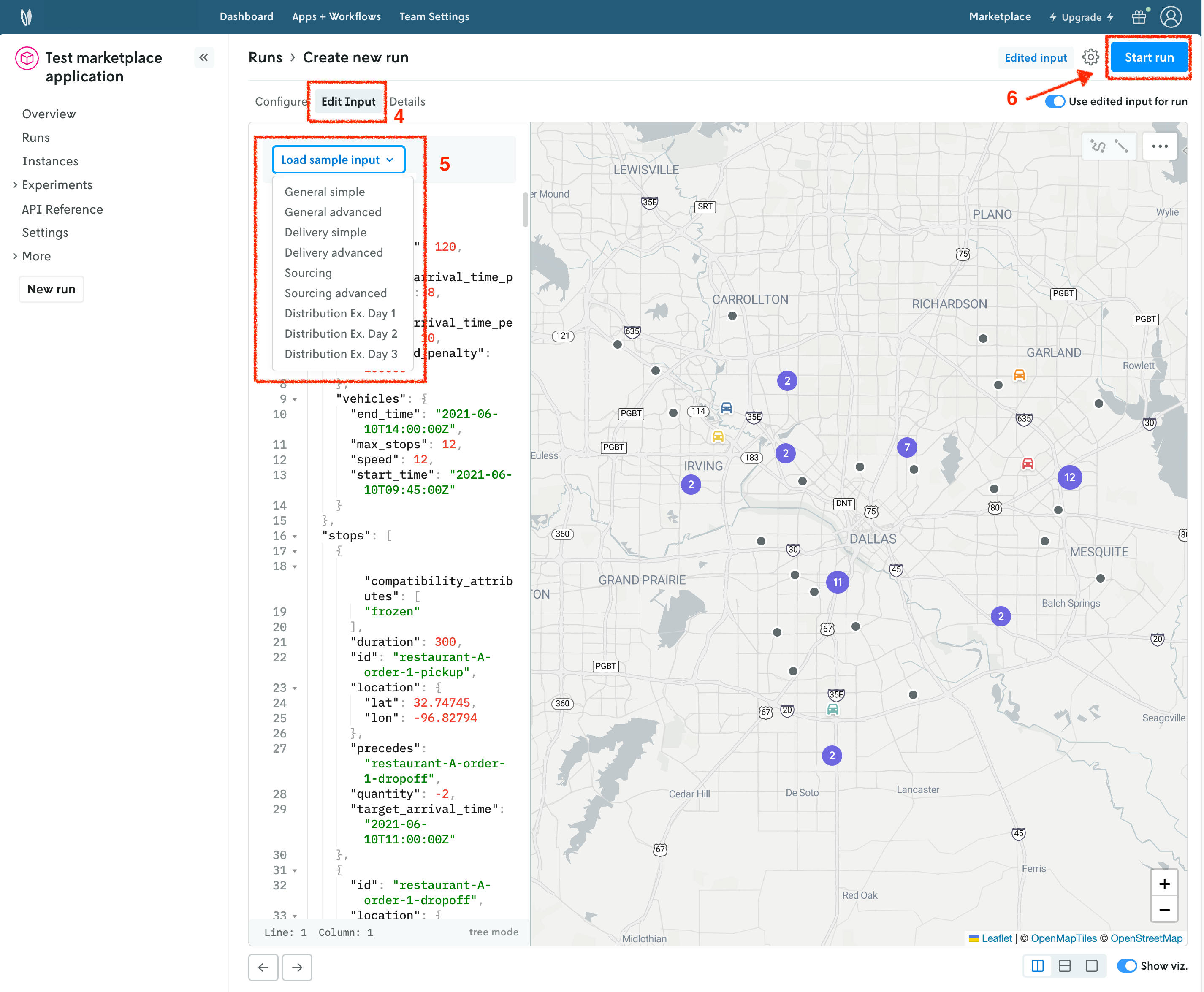
The run is executed in the same way as before.
4. Perform a scenario test
We are going to take full advantage of the Nextmv Platform by creating a scenario test. Scenario tests are generally used as an exploratory test to understand the impacts to business metrics (or KPIs) on situations such as:
- Updating a model with a new feature, such as an additional constraint.
- Comparing how the same model performs in different conditions, such as low demand vs. high demand.
- Doing a sensitivity analysis to understand how the model behaves when changing a parameter.
Start by creating an input set. As the name suggests, it is a set of inputs, and it serves as a base so that we can perform runs varying one or more configurations (options). To create an input set, you have several options. For this tutorial, we will be using the Nextmv Console.
- Navigate to the
Input setssection. - Set a name for your input set.
- Use the
Instance + date rangecreation type given that we already have a few runs on thelatestinstance. - Create the input set.
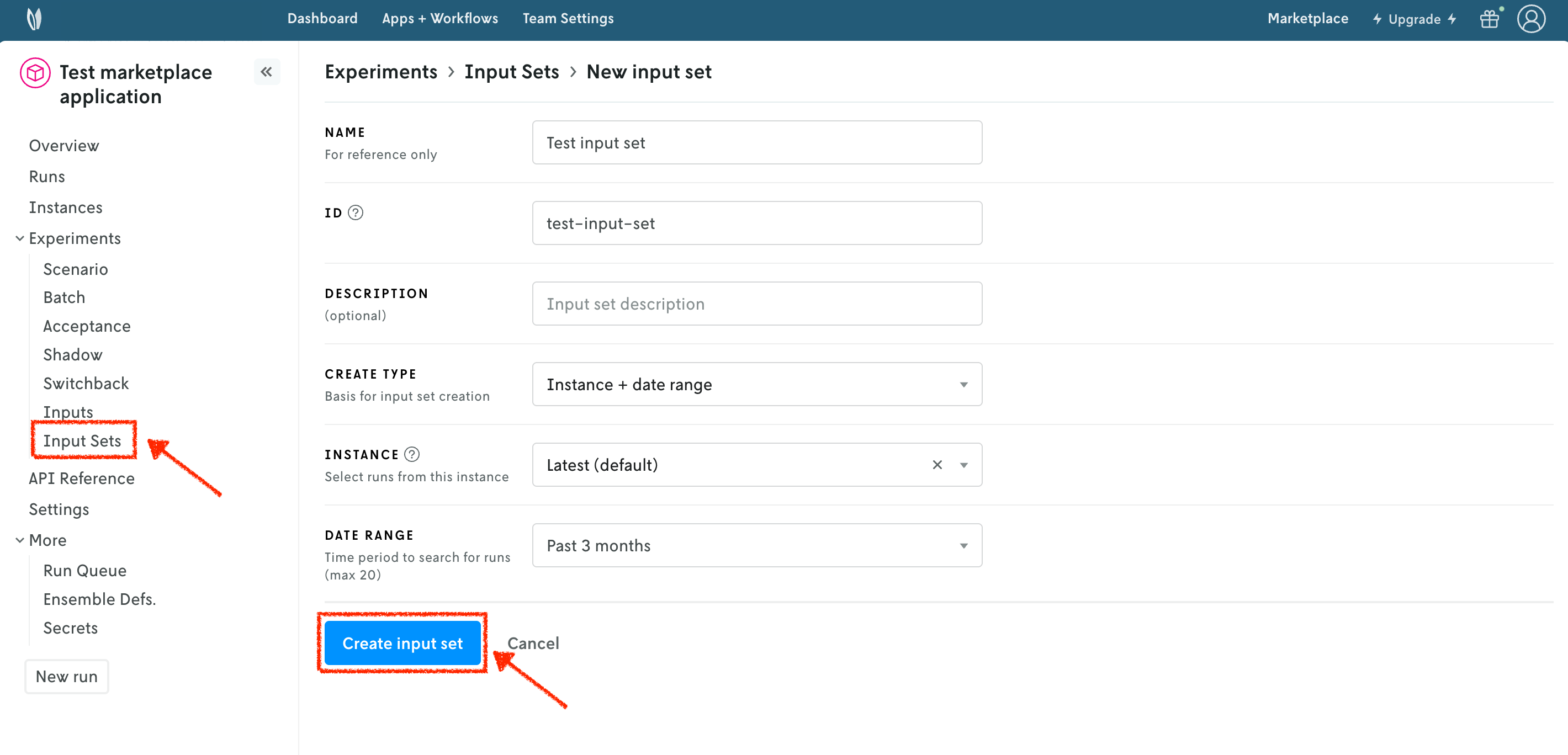
Once your input set has been created, we are going to create a scenario test. Similarly to runs and input sets, you may use the Console or other alternatives. We will continue to use the Nextmv Console in this tutorial.
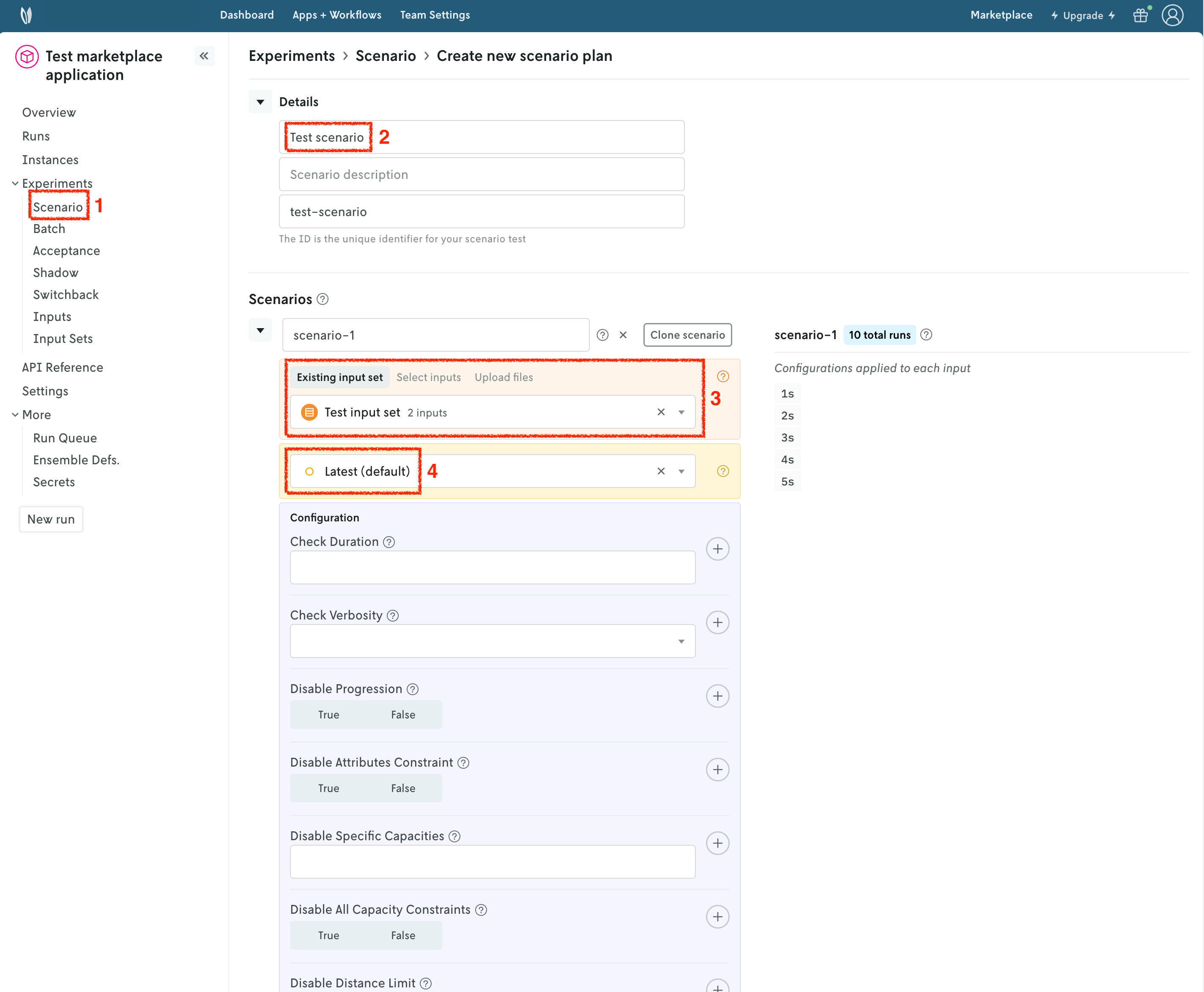
- Navigate to the
Scenariosection. - Set a name for your scenario test.
- Select the input set you just created in the previous step.
- Select the
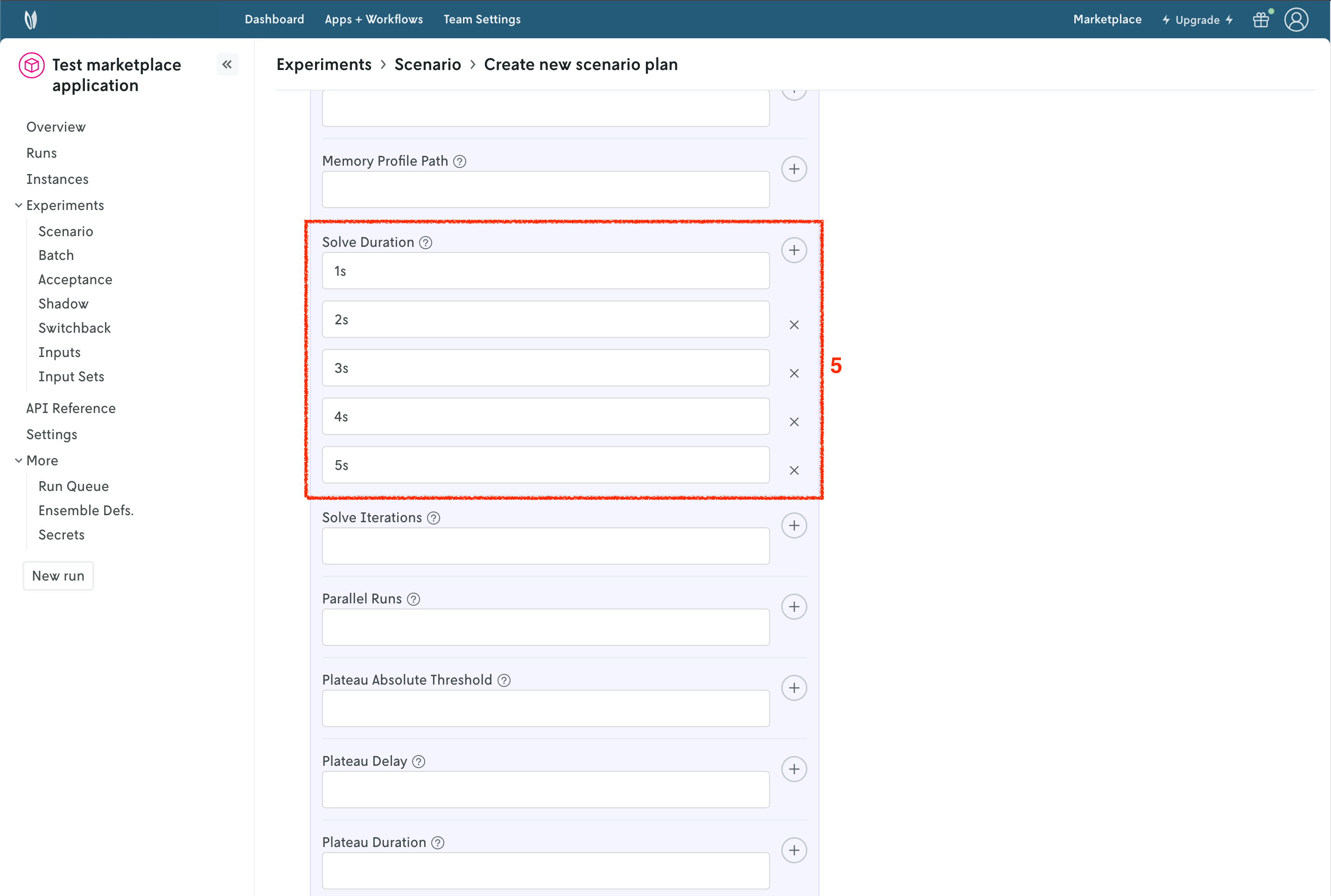
latestinstance. - Create configuration combinations, which will be factored in to create the scenarios. Scroll down to find the
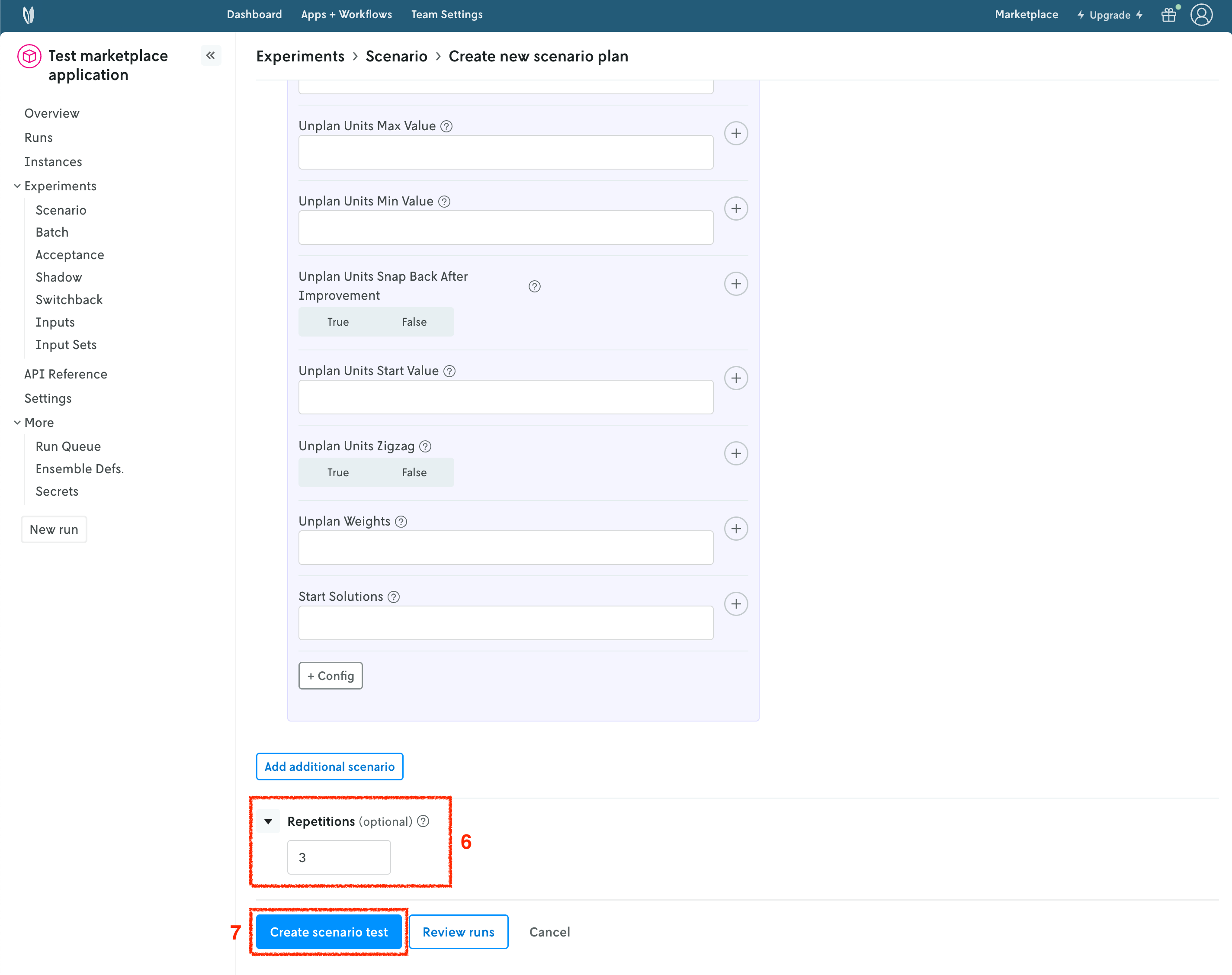
Solve Durationoption. We are settingSolve Durationto be1s,2s,3s,4s, and5s. - Optionally, you may configure repetitions. These are useful when the results are not deterministic.
- Create the scenario test. Review and confirm the number of scenarios that will be created.
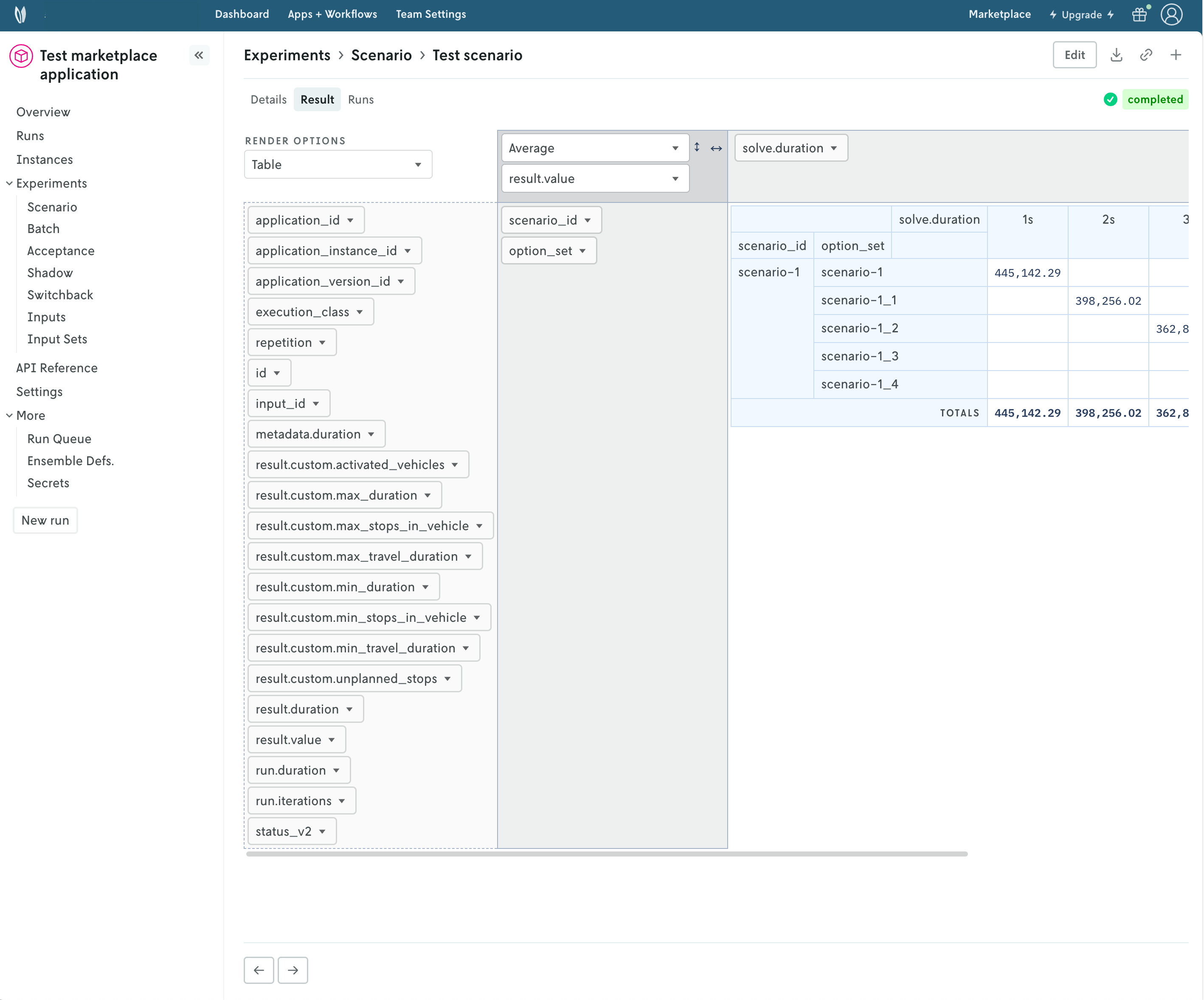
Once all the runs in the scenario test are completed, you can visualize the result of the test. A pivot table is provided to create useful comparisons of your metrics (statistics) across the scenario test runs.
🎉🎉🎉 Congratulations, you have finished this tutorial!